
WELCOME BONUS 100%
UP TO €500 + FREE
BET
UP TO €500 + FREE
BET
Home → Games
Casino games at Starbet Lr
Double Down: Doubling Your Bet After Two Cards
In Blackjack with six to eight decks, the Insurance side bet carries a steep 7.47% house edge against a 92.53% RTP. This specific wager pays 2:1 but requires a separate stake up to 50% of the main bet when the dealer shows an Ace. Base strategy dictates always declining this option unless card counting yields a true count of plus three or higher. Taking insurance regularly erodes bankroll efficiency for high rollers seeking optimal mathematical returns.
The standard single-deck game offers a superior 0.15% house edge compared to the multi-deck variant's 7.47% insurance trap. However, many tables replace the traditional 3:2 blackjack payout with a inferior 6:5 ratio, which increases the house advantage by exactly 1.39 percentage points. A ten-dollar bet then yields only twelve euros instead of fifteen, drastically altering long-term profitability. High stakes players must verify payout structures before sitting down to avoid these hidden costs.
Surrender rules provide a critical mitigation tool by allowing players to forfeit half their stake after the dealer checks for blackjack. Late surrender improves the overall RTP by approximately 0.08 percentage points, reducing losses on weak hands like sixteen against a ten. Early surrender is far more valuable at minus zero point six percentage points but remains extremely rare in modern casinos. Utilizing this rule effectively preserves capital during unfavorable variance periods in high-limit environments.
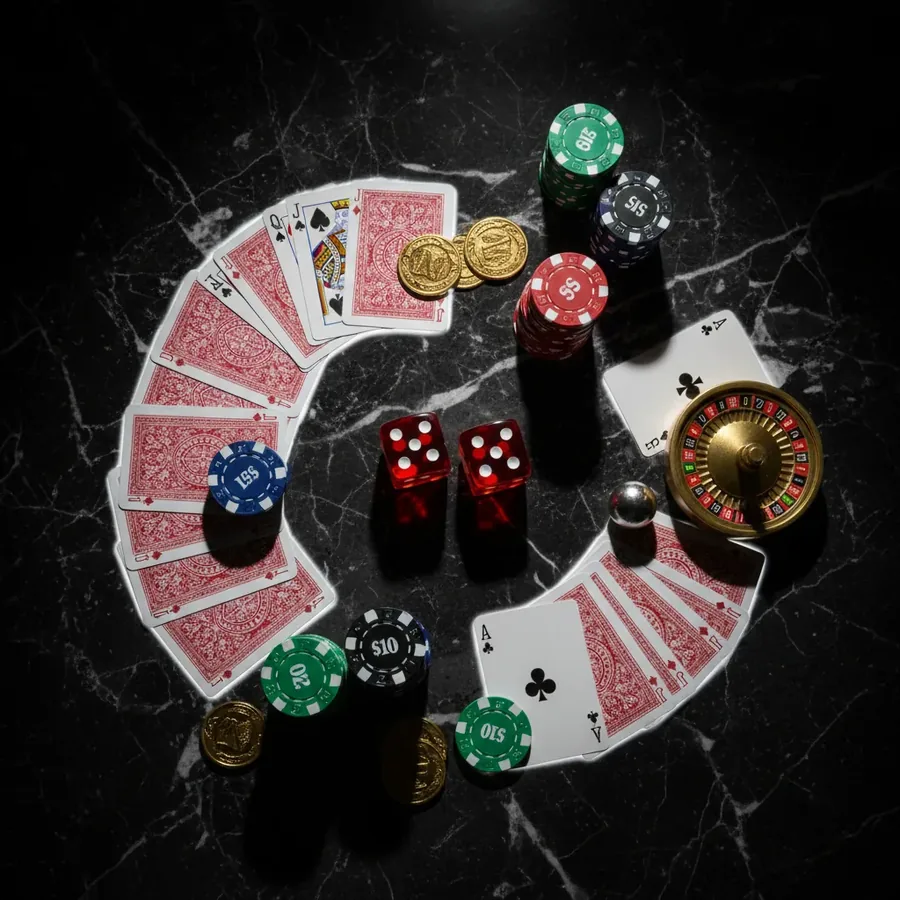
Columns and Dozens Pay 2:1 in Roulette
The American roulette wheel features thirty-eight sectors including both zero and double zero, resulting in a 5.26% house edge and 94.74% RTP. Column bets covering twelve numbers pay 2:1, matching the odds of dozen wagers despite the extra green pocket doubling the casino advantage. The straight-up bet offers 35:1 while splits pay 17:1 and streets return 11:1 for those targeting higher volatility outcomes. This structure ensures the house maintains a significant mathematical lead over all external proposition bets.
The French roulette variant maintains thirty-seven sectors but lacks La Partage or En Prison protections for inside wagers, keeping the edge at 2.70%. Inside bets like straights pay 35:1 and corners offer 8:1, mirroring European payouts without the regulatory safety nets found elsewhere. Columns and dozens still pay 2:1, but the absence of refund rules on zero means every loss is absolute. High rollers should note that this configuration eliminates the theoretical reduction in house advantage available in other jurisdictions.
The Five Number bet covering zero, double zero, one, two, and three stands out as the worst wager with a 7.89% house edge. Paying only 6:1 for five covered sectors, it significantly underperforms even the standard column bets paying 2:1 across twelve numbers. This unique trap has no equivalent on European wheels and represents a sharp deviation from fair probability calculations. Savvy players avoid this specific combination entirely to protect their bankroll from excessive mathematical erosion.
RNG Roulette vs. Live Table: Four Clear Differences
Random Number Generator systems operate without physical constraints, allowing faster spin cycles than live dealer tables which require manual ball handling. While RNG versions maintain identical mathematical expectations like the 5.26% edge on American wheels, the volume of decisions per hour increases substantially. This acceleration impacts variance rates and total turnover requirements for bonus clearing, as higher hand counts generate more betting opportunities rapidly. Players must adjust their bankroll management strategies to accommodate the increased pace of digital table games.
Live dealer setups introduce social interaction and visual verification absent in purely algorithmic environments, though the underlying house edges remain unchanged. The American wheel's 5.26% disadvantage applies equally to virtual spins and physical croupier operations regardless of the delivery method. However, live tables often impose higher minimum bets suitable for high rollers seeking premium service and tangible game integrity. The choice between digital speed and physical transparency depends entirely on individual player preferences and risk tolerance levels.
Bonus wagering contributions vary significantly between game types, with table games typically contributing only 10% toward turnover requirements compared to slots at 100%. This restriction forces high-stakes players to balance their bonus utilization carefully, as roulette bets progress clearance much slower than slot spins. Understanding these contribution percentages is vital for maximizing the value of promotional offers like the 300% welcome bonus up to two thousand euros. Ignoring these terms can lead to unexpected forfeiture of winnings derived from restricted game categories.
When to Surrender 16 vs 10?
Late surrender allows players to forfeit half their bet after the dealer verifies they do not hold an initial blackjack. This rule reduces the house edge by approximately 0.08 percentage points, providing a modest but mathematically sound defense against strong dealer upcards. Without this option, players must endure full losses on statistically disadvantaged hands like sixteen against a dealer ten or nine. Utilizing surrender correctly transforms potential negative expectation scenarios into manageable partial losses rather than complete capital destruction.
The strategic application of surrender becomes critical when holding sixteen against a dealer ten, where the probability of winning drops significantly below fifty percent. Declining to surrender in this scenario exposes the player to a near-certain loss given the dealer's strong position. Accepting the fifty percent refund preserves half the stake, improving long-term expected value compared to hitting or standing blindly. This decision aligns with basic strategy principles designed to minimize the inherent house advantage in multi-deck games.
Early surrender, though offering greater value at minus 0.6 percentage points, is rarely available in contemporary casino environments due to its severe impact on profitability. Most establishments restrict players to late surrender variants that occur only after checking for dealer naturals, limiting the defensive utility slightly. Nevertheless, the available late option remains superior to playing without any surrender mechanism whatsoever for high-volume blackjack sessions. Analyzing these rule variations helps players identify tables offering the most favorable conditions for sustained play.
En Prison on Zero Gives Second Chance
French roulette traditionally offers En Prison or La Partage rules that mitigate losses when the ball lands on zero for even-money bets. These regulations are explicitly excluded for inside wagers in certain jurisdictions, maintaining a 2.70% house edge similar to European standards without protective mechanisms. Outside bets like columns and dozens paying 2:1 benefit from these rules where applicable, reducing the effective disadvantage on zero hits. Players must verify whether these specific protections apply to their chosen table format before placing substantial wagers.
The absence of En Prison on inside bets means that straights paying 35:1 and splits returning 17:1 face the full brunt of the house edge on zero. Unlike outside propositions that might freeze or halve stakes, inside winners receive full payouts while losers absorb the entire loss immediately. This structural difference highlights why high rollers often prefer outside betting patterns when utilizing bonus funds with strict wagering requirements. Understanding these nuances prevents miscalculations regarding actual return percentages across different bet types within the same game.
Comparing the 2.70% edge on unprotected French roulette to the 5.26% on American wheels demonstrates the significant impact of wheel design on player expectancy. The American version's double zero creates additional losing combinations without compensating payout increases, severely penalizing all betting strategies uniformly. High stakes players targeting lower volatility outcomes should prioritize tables featuring single zeros with imprisonment rules whenever possible. Selecting the correct variant is a fundamental step in optimizing long-term mathematical performance and bankroll preservation.
Game categories at a glance
| Category | Examples | Stakes From | Highlight |
|---|---|---|---|
| Slots | Extra Chilli Megaways, Big Bass Bonanza, Sweet Bonanza | 0,10 EUR | thousands of titles |
| Table games | Roulette, Blackjack, Baccarat | 0,50 EUR | classic rules |
| Live casino | Ultimate Roulette, Mega Fire Blaze Roulette Live | 0,20 EUR | real dealers |
| Jackpot games | Mega Moolah, Divine Fortune, Age of the Gods | 0,20 EUR | progressive pools |
| Instant games | Aviator, Plinko, Mines | 0,10 EUR | fast rounds |
| Video poker | Jacks or Better, Deuces Wild | 0,25 EUR | strategy based |
Video Poker 9/6: What the Two Numbers Mean
The Video Poker Jacks or Better 9/6 variant features a Full Pay structure where the first digit indicates a nine-unit payout for a Full House and the second denotes six units for a Flush. This specific paytable yields an RTP of 99.54% against a house edge of only 0.46%, which is significantly lower than the standard 8/5 version that offers just 97.29% return. Players must wager five coins to unlock the top Royal Flush bonus of 4000 credits, as single-coin play caps the jackpot at 800.
In contrast to the 9/6 machine, the shorter 8/5 paytable reduces payouts by two units for Full House and Flush, costing approximately 2.25 percentage points in RTP compared to the optimal version. The 8/5 game returns 97.29% with a 2.71% house edge, while intermediate tables like the 9/5 offer 98.45% and the 7/5 drops sharply to 96.15%. High rollers seeking maximum value must verify the exact paytable coefficients before playing, as even minor reductions drastically alter the long-term mathematical expectation.
The statistical deviation for the 9/6 Jacks or Better game stands at 4.42, indicating high volatility relative to other table games and requiring substantial bankroll management for sustained sessions. Optimal strategy dictates holding specific hands to maximize the expected value, ensuring the theoretical return remains close to the stated 99.54% over hundreds of thousands of hands. This rigorous mathematical approach distinguishes professional video poker play from casual gaming, where incorrect decisions can easily erode the small inherent advantage.
Keno and Bingo with RTP Between 92 and 95
The American Roulette Five Number Bet covers sectors zero, double zero, one, two, and three, offering a payout of 6:1 for selecting any of these five outcomes. This specific wager carries an RTP of 92.11% and a house edge of 7.89%, making it the most expensive bet on the wheel compared to standard straight bets at 94.74%. No equivalent exists on European wheels, isolating this trap exclusively within games utilizing the thirty-eight-sector layout found in Atlantic City and Las Vegas casinos.
American Roulette overall presents an RTP of 94.74% with a 5.26% house edge due to the additional double zero sector doubling the disadvantage compared to the single-zero European variant. Standard payouts remain identical across both versions, with straights paying 35:1 and splits paying 17:1, yet the extra green pocket ensures the American wheel retains more money over time. High rollers should avoid the Five Number Bet entirely, as its 7.89% edge is nearly fifteen times higher than the base game average.
Sic Bo Small and Big wagers operate under Atlantic City rules where sums ranging four to ten win the Small bet and eleven to seventeen win the Big bet. These bets pay 1:1 but lose if any triple appears, resulting in an RTP of 97.22% and a house edge of 2.78%, marking them as the safest options in Sic Bo. The total edge ranges from 2.78% to 33.33% depending on specific side bets, so disciplined players restrict themselves to these primary markets to minimize variance.
Baccarat Tie bets offer an 8:1 payout when the Player and Banker hands finish with identical ranks, representing the worst main wager available with an RTP of 85.64%. The house edge sits at a steep 14.36%, meaning the casino retains nearly one-sixth of all money wagered on this outcome over the long run. Standard deviations measure 2.64 for this market, reflecting the high risk associated with chasing rare coincidences rather than following the statistically superior Player or Banker lines.
Plein Pays 35:1, Cheval Pays 17:1
French Roulette inner bets include the Straight, known as Plein, which pays 35:1 when the ball lands on the exact chosen number among the thirty-seven sectors. The Split, or Cheval, covers two adjacent numbers and returns 17:1, while Streets cover three numbers for 11:1 and Corners cover four for 8:1. Dozen and Column bets pay 2:1, providing broader coverage but maintaining the same underlying house edge structure as the numbered pockets.
The French variant maintains a 2.70% house edge on inner bets because the La Partage or En Prison rules do not apply to these specific wager types. Consequently, the RTP stands at 97.30%, identical to the European wheel despite the distinct nomenclature used for chip placements and payout structures. High rollers placing large amounts on Splits or Straights face the same mathematical disadvantage as European players, with no special concessions reducing the casino's statistical advantage.
Craps Pass Line and Come bets represent alternative table games with different payout mechanics, offering 1:1 odds on winning wagers after the point is established. These bets carry an RTP of 98.59% and a house edge of 1.41%, calculated at 0.42% per roll with a standard deviation of 1.00. Unlike roulette's fixed payouts, craps allows players to take free odds behind their line bets, which can dramatically improve the overall expected return if utilized correctly.
Craps Free Odds bets pay according to true probabilities without any house edge, contributing to a combined RTP of 99.63% when played with Pass Line and 3-4-5x multipliers. The odds portion itself holds a 0.00% house edge, paying 2:1 for points four or ten, 3:2 for five or nine, and 6:5 for six or eight. This unique feature allows skilled players to reduce the effective house edge to 0.37% on the total action, provided they have sufficient bankroll to cover the required odds wagers.
Player pays 1:1 without any commission
Baccarat Player bets win 1:1 whenever the Player hand totals closer to nine than the Banker hand, excluding ties which result in a push for both main wagers. This market avoids the typical 5% commission charged on Banker wins, offering a straightforward payout structure that appeals to players preferring transparent mathematics over complex fee schedules. The decision to bet Player or Banker relies entirely on the third-card drawing rules, which are fixed and do not allow player intervention during gameplay.
How many sectors does the Game Show wheel have?
The American Roulette wheel features 38 distinct sectors, comprising numbers 1 through 36 plus a single zero and a double zero. This configuration results in a house edge of 5.26%, which is exactly double that of European variants lacking the extra pocket. Consequently, every straight bet faces significantly higher long-term expected losses compared to single-zero alternatives.
The Five Number Bet specifically targets five sectors: 0, 00, 1, 2, and 3, covering nearly one-eighth of the total layout. Despite this broad coverage, the payout remains fixed at 6:1, creating a steep house edge of 7.89%. This makes it the most expensive wager on the entire wheel, punishing players who ignore standard column bets.
The presence of the double zero fundamentally alters probability calculations for all inside and outside wagers across the table. While payouts like 35:1 for straights appear identical to European versions, the additional losing sector dilutes win frequency. High rollers must adjust their bankroll management strategies to account for this increased variance and reduced return rates.
Casino Hold'em: Ante Payout Up to 100:1
Casino Hold'em Ante + Call operates under standard rules where the player sets an initial ante bet before receiving two cards. After the flop, the decision to call or fold determines whether the hand proceeds to showdown against the dealer's qualifying hand. The average wager per round equals 2.64 times the ante due to mandatory call requirements.
The payout structure rewards strong hands with specific multipliers, including 100:1 for a Royal Flush and 20:1 for a Straight Flush. Full Houses pay 3:1, Flushes 2:1, and Straights 1:1, while pairs push if the dealer qualifies with a better hand. These odds provide substantial upside potential for skilled players executing optimal strategy consistently.
The house edge stands at 2.16% on the ante but drops to 0.82% when calculated against the total risk element. This distinction arises because the call bet doubles the exposure, effectively diluting the casino's advantage over the full cycle. Players tracking true volatility should focus on the lower percentage figure for accurate long-term expectations.
If the dealer fails to qualify with a pair of fours or higher, the ante pays even money and the call pushes. This rule significantly improves the overall return compared to games requiring stricter dealer qualifications. Understanding this qualification threshold helps high rollers optimize their folding decisions post-flop.
Push in Blackjack: the bet returns
In Blackjack, a push occurs when both the player and the dealer hold identical hand values, resulting in no immediate loss or gain. During a tie, the original stake is returned intact without interest or penalty, preserving the player's bankroll for subsequent rounds. This mechanism ensures fairness when neither party achieves a superior total.
Late Surrender modifies standard push dynamics by allowing players to forfeit half their bet after checking for dealer blackjack. This rule reduces the house edge by approximately 0.08 percentage points compared to games without surrender options available. It provides a strategic exit route when holding weak hands against strong dealer upcards.
Insurance represents a separate side bet offered when the dealer shows an ace, paying 2:1 if the dealer holds blackjack. Statistical analysis reveals a house edge of 7.47% for this wager, making it highly unfavorable for basic strategy players. Only card counters with a true count of +3 or higher might find positive expected value here.
Basic strategy mandates rejecting insurance unless specific counting conditions are met, as the cost outweighs the potential recovery benefit. The 2:1 payout appears attractive but fails to compensate for the reduced probability of dealer blackjack occurring. Maintaining discipline prevents erosion of the overall RTP during long playing sessions.
Dozen 2:1 Hits 12 of 37 Numbers
French Roulette inner bets operate on a wheel with 37 numbered sectors, excluding the special refund rules of La Partage for these wagers. A dozen bet covers twelve consecutive numbers and pays 2:1 upon winning, matching the standard European payout structure. However, the absence of reduction rules keeps the house edge at 2.70%.
This wager targets a third of the available numbers, offering a balanced risk-to-reward ratio for conservative betting approaches. The 2:1 multiplier ensures that successful bets yield profits equal to twice the original stake amount. Players utilizing this strategy often combine it with other outside bets to cover more ground.
The 2.70% house edge remains consistent regardless of the specific dozen selected, reflecting the mathematical inevitability of the zero pocket. Unlike American wheels, the single zero does not penalize dozens differently than any other outside proposition. Long-term results will converge toward this theoretical return rate given sufficient volume.
Combining multiple dozen bets creates a coverage pattern that wins frequently but yields minimal net profit due to overlapping number groups. This approach increases hit frequency but exposes the bankroll to steady erosion from the built-in house advantage. Strategic allocation requires careful calculation of expected value versus variance tolerance.
37 vs. 38 Sectors: One Zero Difference
European Roulette wheels contain 37 sectors, featuring numbers 1 through 36 alongside a single zero pocket for betting purposes. This configuration establishes a baseline house edge of 2.70% for most standard wagers placed on the table layout. The single zero provides a significant mathematical advantage over the casino compared to dual-zero variants.
American Roulette expands the field to 38 sectors by adding a double zero pocket, directly doubling the house edge to 5.26%. This additional green slot disrupts probability distributions for all bets, reducing player returns proportionally across the board. High rollers seeking optimal odds typically avoid American tables entirely.
The difference between 37 and 38 sectors translates to a precise 2.56 percentage point increase in the house advantage for American wheels. This gap widens further when comparing specific bets like the Five Number Bet, which carries a 7.89% edge. Choosing the correct variant is crucial for minimizing long-term financial exposure.
Strategic selection of wheel type serves as the first line of defense against unfavorable odds in casino gaming environments. Players aware of these structural differences can make informed decisions about which tables offer the best theoretical returns. Avoiding the extra zero preserves capital and enhances overall profitability over extended play sessions.
Contact
Live - online chat
Banking









Providers












StarBet Liberia 2026