
WELCOME BONUS 100%
UP TO €500 + FREE
BET
UP TO €500 + FREE
BET
Home → Blackjack
Blackjack at Starbet-Lr: Variants, Rules and Payouts
Surrender vs Playing Out on 16 vs 10
Choosing to surrender a hand of 16 against a dealer's 10 at Blackjack Liberal Vegas Strip offers a strategic advantage, as this variant allows for Late Surrender. This rule, when optimally applied, can improve the Return to Player (RTP) by approximately 0.08 percentage points. This means that by surrendering in specific unfavorable situations, players can mitigate losses and enhance their theoretical long-term returns.
In contrast, playing out a 16 against a dealer's 10 typically leads to a higher house edge. The Blackjack Liberal Vegas Strip variant, with its favorable rules such as S17, DAS, Resplit, and Late Surrender, boasts an RTP of 99.72% and a house advantage of only 0.28%. This highlights the importance of utilizing surrender as a tool when facing strong dealer upcards.
When considering the financial impact, surrendering allows the player to recover 50% of their original bet. This is a crucial decision point for high rollers who aim to preserve their bankroll over extended play sessions. Unlike other blackjack variants where surrender might be unavailable, its presence in Liberal Vegas Strip directly contributes to a lower overall house edge for the player.
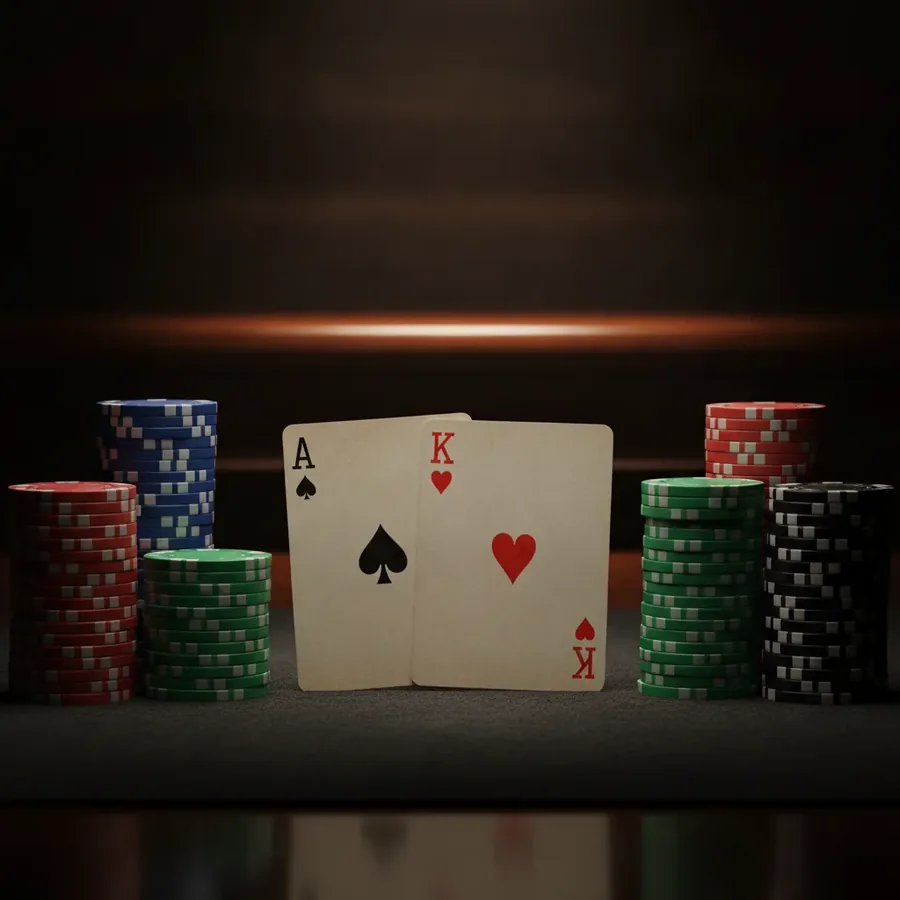
What Hole Card Means at a Live Table
At a live casino table such as Infinite Blackjack by Evolution, understanding the dealer's hole card is paramount for strategic decisions. While not directly visible, its potential impact is factored into the game's mechanics and player choices. The betting range for Infinite Blackjack goes up to 5,000 EUR, accommodating high rollers.
The dealer's hole card significantly influences decisions like splitting or doubling down, especially in variants like Lightning Blackjack, also by Evolution, which allows an unlimited number of players. The RTP for Lightning Blackjack is 99.56%, and the potential for multipliers adds another layer of complexity to hand evaluation.
In Quantum Blackjack Plus Live by Playtech, with bets up to 5,000 EUR, the anticipation of the dealer's hole card is intertwined with the game's multiplier system. The RTP here is 99.57% with optimal strategy, emphasizing that every card dealt, visible or not, plays a critical role in the game's outcome and strategic play.
Ignored Basic Strategy Chart: 1 Percent Wasted
Failing to adhere to basic strategy in blackjack, even in games with favorable rules like Blackjack 6 Decks, S17, DAS, DOA with a 3:2 payout, can significantly increase the house edge. This particular variant has a house advantage of 0.46% when basic strategy is employed. Not using this strategy essentially forfeits a portion of the theoretical RTP.
For instance, a player ignoring basic strategy on a game with a 99.54% RTP could effectively see their returns drop closer to 98.54% due to suboptimal decisions. This difference is substantial for high rollers who play with large stakes, as it directly translates to greater potential losses over time.
The difference between playing optimally with a 0.46% house edge and playing suboptimally can be perceived as approximately 1% of the total wagered amount being lost to the casino. Over many hands and significant betting volumes, this percentage represents a substantial financial disadvantage, making basic strategy essential for serious players.
Blackjack Contributes Only 10 Percent to Wagering
For high rollers utilizing welcome bonuses, such as the 300% welcome bonus up to €2,000 plus 100 free spins, understanding game contribution rates is crucial. Table games, including blackjack, contribute only 10% towards meeting the wagering requirements. This means that for every €100 wagered on blackjack, only €10 counts towards clearing the bonus.
This low contribution rate means that substantial play is required to release bonus funds when primarily playing blackjack. For example, to wager the full €2,000 bonus amount, a player would need to wager €20,000 through table games (€2,000 / 10%). This is a significant amount for high rollers to consider.
In contrast, slots contribute 100% to wagering requirements. If a player were to focus on slots, the same €2,000 bonus would only require €2,000 in wagers. Therefore, high rollers aiming to leverage bonuses effectively should be aware that blackjack play alone will take considerably longer to fulfill the bonus terms.
Insurance vs Even Money on Own Blackjack
Blackjack insurance, available in variants like Blackjack Insurance (6–8 Decks), is a side bet that pays 2:1 if the dealer has a blackjack. It is offered when the dealer's upcard is an Ace. However, the RTP for this bet is a low 92.53%, with a house advantage of 7.47%, making it generally unfavorable for players.
Opting for 'even money' when you have a blackjack and the dealer shows an Ace is essentially taking insurance. This guarantees a payout equal to your original bet, regardless of the dealer's hand. While it removes risk, it forfeits the potential for a higher 3:2 payout if the dealer does not have blackjack.
For high rollers, the decision between taking insurance (or even money) and letting the hand play out is significant. With a 3:2 payout on a blackjack, the potential return is 1.5 times the bet. Accepting even money at 1:1 reduces this potential profit, particularly in scenarios where the dealer's Ace does not result in a blackjack.
Blackjack variants at a glance
| Variant | Payout | House edge | Rule | Bet range |
|---|---|---|---|---|
| Blackjack Split / Double / H17 – Regel-Effekte | n.a. (Regel-Modifikatoren) | H17 +0.22 Prozentpunkte; RSA −0.08 Prozentpunkte; DAS −0.14 Prozentpunkte | Dealer Hits Soft 17 verschlechtert RTP um 0.22 Prozentpunkte; Resplit Aces verbessert um 0.08 Prozentpunkte; Double After Split verbessert um ca. 0.14 Prozentpunkte; 6 Decks statt 8 – ca. 0.02 Prozentpunkte. | Double – Einsatz ×2 mit einer Karte; Split – bis 4 Hände; Ass-Split meist mit einer Karte. |
| Blackjack Ein Deck, klassische Regeln, 3:2 | 99.85% | 0.15% | Weniger Decks = niedrigerer Vorteil; ein Deck gibt ca. −0.48 Prozentpunkte gegenüber 8 Decks. Oft durch 6:5 Auszahlung kompensiert. | Blackjack 3:2, Gewinn 1:1 |
| Blackjack Liberal Vegas Strip (liberale Regeln, 3:2) | 99.72% | 0.28% | Günstigste Regelkombination: S17 + DAS + Resplit + Late Surrender. Standardabweichung 1,15 | Blackjack 3:2, Gewinn 1:1 |
| Blackjack Auszahlung 6:5 statt 3:2 (6 Decks) | 98.15% | 1.85% | Ersatz von 3:2 durch 6:5 fügt exakt +1.39 Prozentpunkte zum Vorteil des Casinos hinzu – stärker als jede andere Regeländerung. Bei $10 Einsatz zahlt Blackjack $12 statt $15. | Blackjack 6:5, Gewinn 1:1 |
| Blackjack Insurance / Versicherung (6–8 Decks) | 92.53% | 7.47% | Separate Nebenwette bis 50% der Hauptwette, wenn der Dealer ein Ass hat. Basisstrategie schreibt IMMER Ablehnung vor (außer Karten zählen bei True Count ≥ +3). Bei einem Deck Vorteil ≈ 5.88% | Insurance 2:1 |
| Blackjack 6 Decks, S17, DAS, DOA, Auszahlung 3:2, Basisstrategie | 99.54% | 0.46% | Dealer steht auf Soft 17; Verdopplung auf jeder Zweierkarte; Verdopplung nach Split erlaubt; keine Aufgabe. Basisstrategie ist für diesen Wert zwingend | Blackjack 3:2, normaler Gewinn 1:1, Insurance 2:1 |
Insurance Pays 2:1 Yet Still Costs Money
Blackjack Insurance is a side bet offered when the dealer's upcard is an Ace, with payouts of 2:1. However, this wager carries a significant house edge, reported at 7.47% for games with 6-8 decks. For high rollers, consistently taking this bet can erode bankrolls faster than other game elements.
The optimal strategy for Blackjack Insurance, as dictated by basic strategy, is to always decline this bet, as it is mathematically disadvantageous. Card counters might consider it only at a True Count of +3 or higher, indicating a significant advantage in the remaining deck.
Accepting the insurance bet, even at a 2:1 payout, can lead to substantial losses over time for a high roller. For instance, a $5,000 bet on insurance with a 7.47% house edge would, on average, result in a loss of $373.50 per instance of taking the bet.
Infinite Blackjack vs Classic Seven-Seat Table
Infinite Blackjack, offered by Evolution, provides an unlimited number of seats, allowing all players to participate simultaneously with a betting range from €1 to €5,000. This continuous availability is a key draw for high rollers seeking immediate action without waiting.
In contrast, a classic seven-seat Blackjack table, like Blackjack 6 Decks with S17 and DAS, typically accommodates a maximum of seven players. The RTP for Blackjack 6 Decks, S17, DAS is 99.54%, offering a low house edge of 0.46% for those who prefer a more traditional, finite game.
The choice between Infinite Blackjack and a traditional seven-seat table often comes down to player preference and availability. Infinite Blackjack's unlimited seating and €5,000 bet limit cater to high rollers who prioritize constant engagement, while classic tables may offer a more focused, strategic environment.
Shoe, Cut Card, and 75 Percent Penetration
The use of a shoe, particularly in multi-deck Blackjack games, is standard practice. A cut card is inserted approximately 75 percent into the shoe, dictating the penetration depth before the cards are reshuffled.
A 75 percent penetration rate means that a significant portion of the shoe is played before the shuffle. This impacts the strategic options available to players, particularly those who employ card counting techniques, as it influences the density of high and low cards.
For high rollers, understanding shoe penetration is crucial as it directly affects the game's dynamics and potential for advantage play. Games with deeper penetration, closer to 80-90%, can sometimes offer slightly better odds by reducing the frequency of reshuffles, though the difference is marginal for most.
Split, Double Down, and Surrender in Numbers
The rules governing splitting, doubling down, and surrendering significantly influence the house edge in Blackjack. For example, allowing Double After Split (DAS) reduces the house advantage by approximately 0.14 percentage points, a beneficial modification for any player.
Surrendering, specifically Late Surrender, allows a player to forfeit half their bet after the dealer checks for Blackjack, reducing the house edge by about 0.08 percentage points. This option provides a strategic escape route in unfavorable situations.
The ability to double down on any two cards (DAS) and resplit Aces are particularly valuable rules for high rollers. These actions, combined with favorable payouts like 3:2 for Blackjack, contribute to a lower overall house edge, enhancing the player's potential return.
Chose Wrong Table for 5 EUR Bankroll
Choosing an inappropriate table can disproportionately impact a player with a smaller bankroll. For instance, a player with a €5 bankroll would find tables with a minimum bet of €10, such as Quantum Blackjack Plus Live or Infinite Blackjack, to be inaccessible.
The Blackjack Auszahlung 6:5 statt 3:2 variant, with a 1.85% house edge, significantly reduces player returns. A €5 bet here would yield only €6 on a Blackjack, compared to €7.50 on a 3:2 payout table, making it a costly choice for any bankroll.
A player with a €5 bankroll would need to seek out tables with lower minimum stakes, likely found in standard Blackjack variants rather than the high-limit live dealer options. Misjudging table limits can quickly deplete a small bankroll without providing any opportunity for sustained play.
Register Late Surrender correctly in three steps
Blackjack Surrender, specifically Late Surrender, allows players to forfeit half their bet after the dealer checks for blackjack. This rule modification has a measurable effect on the return to player (RTP), offering a slight improvement by approximately 0.08 percentage points. The player forfeits 50% of their stake but preserves the remaining half in disadvantageous situations.
While Early Surrender provides a more significant RTP boost of up to 0.6 percentage points, it is exceptionally rare in online blackjack variants. Late Surrender, in contrast, is more commonly encountered and represents a valuable, albeit smaller, strategic advantage for the player. This feature is primarily observed in specific blackjack game variations offered by providers.
The implementation of Late Surrender means that players can mitigate losses when facing unfavorable dealer upcards or when their own hand is particularly weak. For instance, with a $10 bet, a player might choose to surrender and lose $5, rather than risk the entire $10. This strategy is distinct from the common Blackjack payout of 3:2.
Side Bet Every Round: Budget Lasts 30 Rounds
Infinite Blackjack, offered by Evolution, features a range of side bets including Any Pair, 21+3, Hot 3, and Bust It, alongside unlimited player positions. The betting range for this game is from 1 EUR to 5,000 EUR per hand, accommodating a wide spectrum of players. The RTP for Infinite Blackjack is stated as 99.47%.
Lightning Blackjack, also from Evolution, introduces Lightning multipliers that can reach up to 25x on winning hands, adding a dynamic element to gameplay. The betting limit here is from 1 EUR to 2,500 EUR, with an RTP of 99.56%. This variant allows an unlimited number of players to participate simultaneously.
Quantum Blackjack Plus Live by Playtech offers impressive Quantum multipliers, potentially reaching 1,000x on specific three-card 21 combinations. The wager limit extends from 1 EUR to 5,000 EUR, and the RTP, when employing optimal strategy, is 99.57%. For a budget of 1,500 EUR, assuming an average bet of 50 EUR per round, this would allow for approximately 30 rounds of play including side bets.
Ace Split: only one card per hand
Certain blackjack variants detail specific rules regarding Ace splitting, often restricting play to a single card per new hand. For example, in Blackjack Split / Double / H17, the rule specifies that Ace splits typically involve receiving only one additional card. This limitation is a crucial factor in the game's strategy and house edge calculations.
The house advantage can be influenced by the intricacies of splitting rules. In Blackjack Split / Double / H17, the ability to Double After Split (DAS) improves the RTP by approximately 0.14 percentage points. Conversely, the dealer hitting on a soft 17 (H17) increases the house edge by 0.22 percentage points.
While the rules for Ace splitting might vary, it is important to note the RTP for different blackjack configurations. A Blackjack with a single deck under classic rules and a 3:2 payout offers a high RTP of 99.85%, presenting a house advantage of only 0.15%. This contrasts with variations that may have less favorable splitting or payout rules.
Highroller from 500 EUR per hand
Online casinos often cater to high rollers with elevated betting limits, and Starbet-Lr is no exception, offering substantial stakes at its live dealer tables. For example, Infinite Blackjack and Quantum Blackjack Plus Live both permit wagers up to 5,000 EUR per hand, providing ample scope for significant betting action. These limits are designed for players who prefer high-stakes gaming.
Lightning Blackjack, another Evolution offering, allows bets up to 2,500 EUR per hand, still a considerable amount for serious players. The availability of high betting limits across multiple blackjack variants signifies a commitment to providing a premium gaming environment for those with larger bankrolls. These limits ensure that high rollers can place substantial bets according to their preferences.
For a player wagering 500 EUR per hand on a game with a 99.5% RTP, the expected loss over a long period would be 0.5% of their total wagered amount. At this stake level, even a few hands can represent a significant financial commitment. The bonus terms, offering a 300% welcome bonus up to 2,000 EUR, could be particularly attractive for high rollers looking to maximize their initial deposit.
One Deck vs Eight Decks in House Edge
The number of decks used in blackjack significantly impacts the house edge. A game played with a single deck, such as Blackjack Ein Deck, klassische Regeln, 3:2, offers a favorable RTP of 99.85%, resulting in a house advantage of just 0.15%. This reduction in decks provides an approximate 0.48 percentage point decrease in the house edge compared to games with more decks.
Conversely, blackjack variants utilizing multiple decks, like the 6-deck game described with S17, DAS, DOA, and 3:2 payout, present a house edge of 0.46% and an RTP of 99.54%. While still competitive, this demonstrates a slightly higher house advantage due to the increased number of decks. The standard deviation for Blackjack Liberal Vegas Strip is noted as 1.15.
The impact of deck count is often balanced by other rule variations. For instance, a 6:5 payout for blackjack, as seen in Blackjack Auszahlung 6:5 statt 3:2 (6 Decks), dramatically increases the house edge by 1.39 percentage points, pushing it to 1.85% despite using multiple decks. This rule alone adds more to the casino's advantage than using eight decks instead of six.
Contact
Live - online chat
Banking









Providers












StarBet Liberia 2026